
Education & Training
Hello! I am a Licensed Marriage and Family Therapist in the state of Oregon. I am also pre-Licensed as a Marriage and Family Therapist Associate in the state of Washington.
I completed both my undergraduate and graduate degrees at the University of Oregon, making me a “Double Duck!”
Supervised by: Alana Ogilvie, LMFT, AASECT Certified Sex Therapist
Philosophy & Approach
I believe we can heal from past ruptures in attachment and work toward building healthier and more secure attachments. I am passionate about working with individuals and couples toward identifying needs and expectations in relationships, rebuilding trust, repairing ruptures in attachment, and navigating conflict and communication patterns.
We can get stuck in patterns, and the stakes can feel even higher when we are stuck in a negative pattern with people we deeply care about. I aim to help clients build communication and conflict management skills such as identifying and interrupting the conflict cycle to reduce the intensity and move towards connection and repair. My approach is to take a ‘birds eye view” the conversation and identify any of the ‘sticky points’ where disconnect occurs. Once we have identified the disconnect, I work with clients on building communication tools that best fit their needs.
When I am supporting individuals or couples struggling with intimate connection, I aim to create a sex-positive and empowering space to explore. I believe it is important to first understand how intimacy is being defined by the individual and their partner(s). Oftentimes, I hear clients share that they assumed “intimacy = sexual intimacy” which can feel limiting.
I work with clients toward expanding the definition of intimacy to create more opportunities for intimate connection. Once the definition of intimacy is expanded beyond sexual, this allows clients to turn toward forms of intimate connection that works best for their relationship. There is no “right way” or “perfect frequency” other than the frequency and quality of intimacy that you and your partner(s) co-create. I love working with clients as they explore what kind of intimacy feels most connective, safe, and pleasurable.
My Personal Journey

I was adopted from China as an infant and identify as a transnational, transracial adoptee raised by parents from different cultural backgrounds. My dad is Japanese American and grew up in Hawai’i, while my mom grew up in New York. Their spiritual upbringings also differed: my dad was raised Catholic, and my mom was raised Jewish. Growing up in this uniquely cross-cultural family showed me how powerful and essential communication is for bridging differences, resolving misunderstandings, and building trust and connection.
My relatively recent ADHD diagnosis brought both relief and grief, along with frustration over how long I believed something was wrong with me, simply because tasks that seemed easy for others often required much more effort from me. Since then, I have had a special interest in learning more about how the neurodivergent brain works, and finding tools and resources that better accommodate the neurodivergent brain’s needs. I love sharing these resources with clients so they can better understand themselves and their brains needs.
My interest in Sex Therapy
As someone who has experienced chronic illness that significantly impacted sexual intimacy and connection in my long-term partnership, I have a special place in my heart around supporting clients exploring ways to navigate the emotional and physical impact that chronic illness can have on self-esteem, self-confidence, energy, and anxiety around intimacy.
I focused on individual therapy and pelvic floor therapy to address the impact my chronic condition had on my mental and physical health. While I was skeptical of pelvic floor therapy, I am so grateful that I gave it a try and had a provider that I trusted throughout the process. Addressing my mental and physical health helped me feel hopeful that change was finally possible. My experiences are a significant part of why I am a strong advocate for clients navigating mental health and medical concerns.
Shifting my mindset toward a more flexible definition of intimacy, and no longer comparing my relationship’s sex intimate life with others, the pressure around addressing intimacy decreased, and it felt more accessible to talk about the kind of intimacy that works best for my partner and I. Being able to support clients expand their definition of intimate connection and turn toward the kind of intimacy that feels best to them is one of my favorite parts of working as a sex therapist.
A little about what I do outside of work.
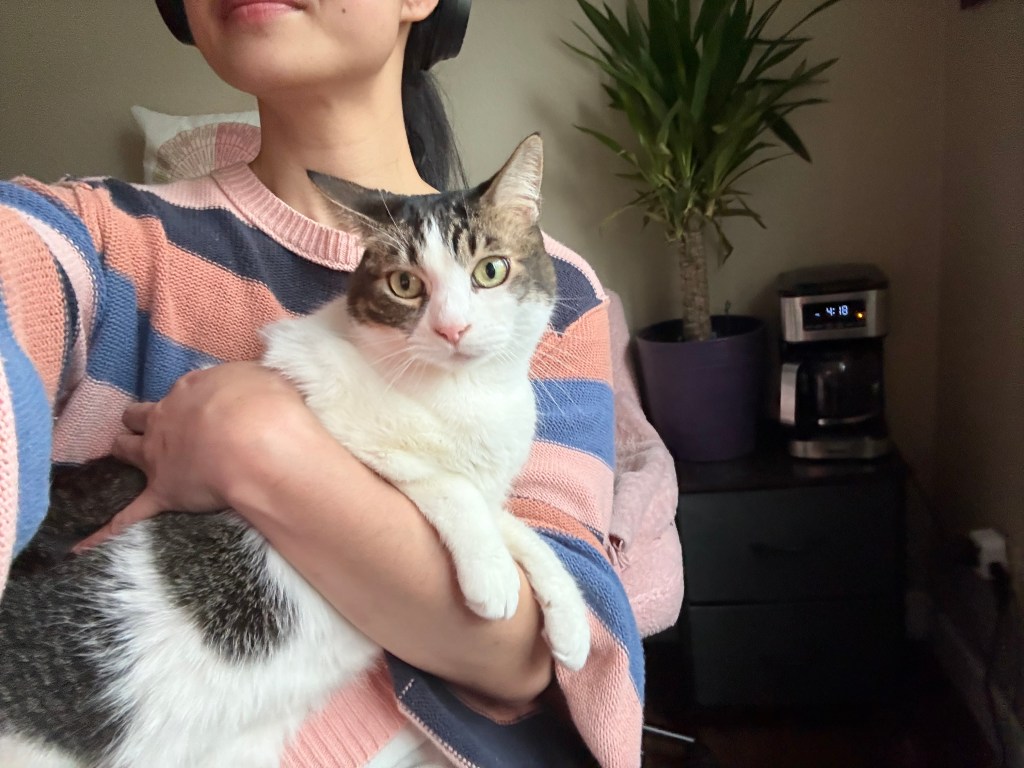
When I’m not working as a therapist, I am most likely finding some way to enjoy movement through dance. I love learning the aerial arts and pursuing a hobby where there is no personal gain, other than engaging in something that brings me joy. If I am not trying to fly on an aerial apparatus, I am spending time with my two cats or exploring new cafes in the area.
Meet my co-workers